
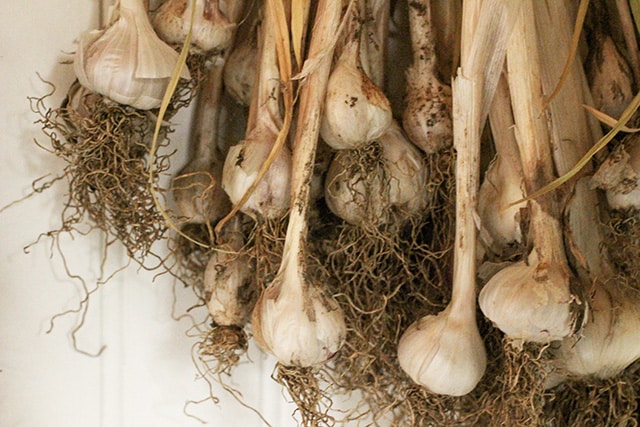
If you’ve ever wondered how to grow garlic at home, store it properly, or use every part of it, from shoot to peel, you’re in for a treat.
In this second interview from our gardening series, we sat down with a passionate home grower and home cook who has been harvesting garlic for over five years.
The conversation ranges from culinary tips and DIY fertilizers to garlic’s surprising role in mulching and natural pest control.
“One garlic a day keeps the doctor away”
It started with a bold claim:
“If you eat one garlic a day, it deters you from getting cancer.”
And from there, we spiraled into a deep, flavorful conversation.
But just to clarify—
“You talking about a whole bulb?”
“No, just one clove. When you break it up.”
Kris doesn’t eat garlic raw but enjoys it in pesto, where the extra virgin olive oil helps mellow the heat:
“You can still taste it, but it’s not that hot because the oil coats your mouth. That’s why greasy food tastes good.”
How to Grow Garlic at Home: The Basics
Here’s what you need to know if you want to grow garlic in your garden or a container:
Types of Garlic
Produces flower-like shoots called “scapes”
No central stalk, stores longer
Huge cloves, longer grow time
Best Time to Plant
Fall planting gives best results
Soil & Container Tips
- Use well-draining soil
- Pot should have holes and be raised slightly so water doesn’t pool
- Garlic doesn’t need deep soil—8–10 inches deep is enough
Sun & Water
- Garlic loves full sun
- Water frequently, especially in dry weather
- Monitor soil moisture to avoid over- or under-watering
When to Harvest
- Look for 2–3 brown leaves as a signal
- Don’t leave it in the ground too long—it can rot
Garlic Scapes: The Underrated Delicacy
Hardneck garlic produces shoots or “scapes” that need to be removed to help the bulb grow larger. But don’t toss them:
“You can cook them just like asparagus. They’re delicious.”
If you don’t remove the scapes, the bulb size may suffer.
Every Part of Garlic Has a Purpose
Kris doesn’t waste a thing:
- Garlic/onion peels: Use for mulching around plants or dry them and steep in water for a DIY fertilizer. “The peel deters bugs—especially on tomatoes and roses.”
- Garlic water fertilizer:
- Soak garlic/onion peels in water for 3 days
- Use to fertilize plants or propagate new ones
- Add a drop of honey to encourage root growth
“My orchid hadn’t bloomed in a while. I used the garlic peel water, and now it’s blooming.”
Garlic Storage Myths—Debunked
“You can use garlic anytime—even right from the garden.”
While some people hang garlic for months, our expert says:
- Fresh garlic is usable immediately
- But harvesting too early or late affects how long it stores
- Proper timing helps extend shelf life
Garlic in the Kitchen: “I Put It On Everything”
“Garlic just makes food taste better. I don’t know why.”
Kris uses garlic in nearly every dish she makes—from stir-fries to sauces. And the aromatic smell of sautéed garlic and onion?
“Even if you’re not hungry, the smell will make you hungry.”
Final Thoughts: Garlic Takes Time, but It’s Worth It
“It’s really not easy to grow garlic. It takes nine months. Like a baby.”
Whether you’re growing garlic for pesto, mulching your roses, or brewing your own natural fertilizer, this versatile bulb offers so much more than flavor. It teaches patience, rewards attention, and connects the garden with the kitchen in the most aromatic way possible.
Garlic plays well with peppers in the garden. If you’re looking to branch out, read our guide on growing peppers and Swiss chard.