
Amazon offers hundreds of herb garden starter kits, making it difficult to choose the right one. After researching the most popular options, these five kits stand out for their quality, features, and value across different needs and budgets.
What Makes a Good Herb Garden Starter Kit?
The most important factors when choosing an herb garden kit include seed quality and freshness, whether soil or growing medium is included, reusable containers, and clear instructions. Many buyers make the mistake of choosing kits based solely on packaging or reviews without considering these practical elements.
The number of herb varieties matters too. Some kits include 4-5 herbs while others offer 10 or more. More varieties aren’t necessarily better for beginners, but having options allows experimentation to see what grows best in specific conditions.
For more guidance on selecting beginner-friendly herbs, check out our guide to the easiest herbs for indoor growing.
1. HOME GROWN Indoor Herb Garden Kit – Best Overall for Beginners
This kit includes 5 essential herbs: basil, cilantro, mint, parsley, and thyme. The seeds come in hermetically sealed packets, which preserves freshness significantly longer than standard paper envelopes used in cheaper kits.
The kit includes soil pellets that expand when water is added, reusable growing pots, and wooden plant markers. The instructions are beginner-friendly and cover germination times, watering schedules, and troubleshooting common problems. Basil typically germinates in 5-10 days with this kit, while parsley can take up to 21 days.
Best Overall 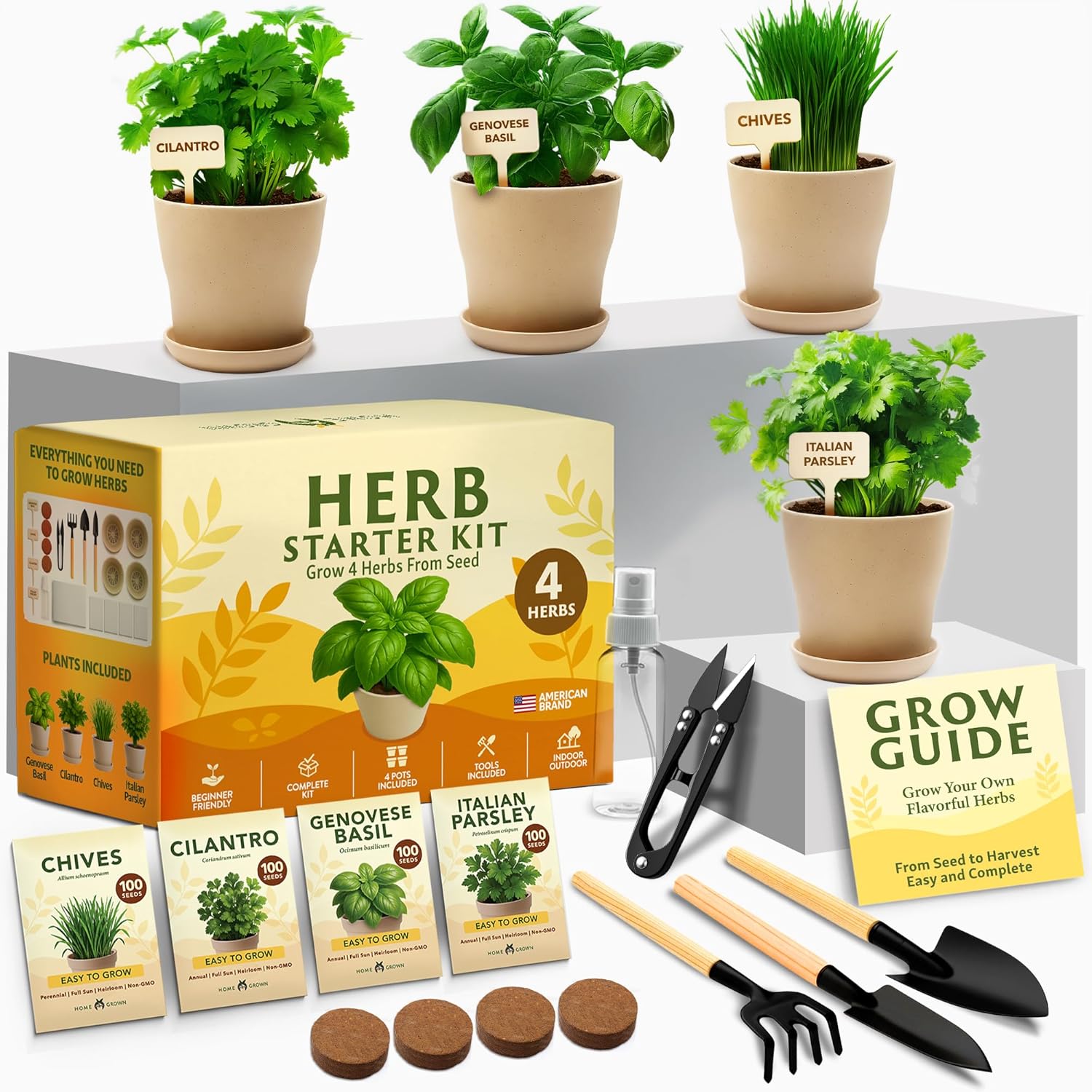
| HOME GROWN Indoor Herb Garden Kit Best Overall for Beginners All-in-One Herb Starter Kit – Get everything you need to grow fresh herbs at home. This complete herb kit includes 4 pots, nutrient-rich soil discs, markers, 4 heirloom herb seed packets, and a full gardening tool set (spade, shovel, rake, shears, tweezers, clippers, wire & supports).. |
2. iRealgarden 10-Variety Deluxe Kit – Best for Variety
This comprehensive kit includes 10 herb varieties: basil, mint, parsley, cilantro, thyme, lavender, oregano, sage, chives, and dill. The kit stands out by including actual gardening tools – pruning shears, plant markers, and a soil moisture meter.
The soil moisture meter is particularly useful since overwatering is the most common cause of herb failure. The device provides clear readings to indicate when watering is needed.
The main consideration with this kit is space and maintenance. Ten different herbs require more room and attention, as each has slightly different light and water requirements. Basil prefers consistent moisture, while lavender thrives in drier conditions.
Best Variety 
| iRealgarden 10-Variety Deluxe Kit Best for Variety Complete Herb Growing Kit – Includes 10 popular non-GMO herbs (Basil, Parsley, Cilantro, Chives, Thyme, Oregano, Dill, Sage, Lavender, and Mint), reusable pots, soil discs, tools, and a moisture meter for easy care. |
3. Planters’ Choice 9-Herb Window Garden Kit – Best Germination Rate
Planters’ Choice specializes in high germination rates, using heirloom varieties that are vacuum-sealed to maintain freshness and viability. This packaging protects seeds from moisture and air exposure that can reduce germination success.
This 34-piece kit includes 9 herbs: dill, basil, chives, thyme, parsley, oregano, cilantro, sage, and mustard. The kit provides 9 reusable pots with drainage trays, 3 nutrient-rich soil discs that expand 6-8 times when water is added, and bamboo plant markers that resist peeling when wet.
The instruction booklet covers each herb’s history, specific planting requirements, and germination timeline. The soil discs come pre-fertilized, eliminating the need to calculate fertilizer ratios for beginners. All seeds are sourced in the USA and tested for germination rates.
Best Germination Rate 
| Planters’ Choice 9 Herb Indoor Window Garden Kit Best for Germination A LUSH OASIS IN YOUR HOME: Elevate your indoor space with a vibrant array of nine gourmet herbs. Feel the unparalleled freshness that only home-grown herbs can offer. |
4. Spade To Fork Organic Kit – Best for Eco-Conscious Growers
Many “organic” herb kits only use organic seeds while including conventional soil and plastic containers. Spade To Fork offers full USDA certified organic certification – the seeds, soil, AND pots are all certified organic.
This family-owned Oregon business typically includes basil, cilantro, parsley, and chives. The organic certification means no synthetic fertilizers or pesticides are used anywhere in the production process.
The biodegradable pots can be planted directly into larger containers or garden soil without transplanting, as roots grow through the pot material naturally.
Best Eco-Concious 
| Spade To Fork Organic Herb Garden Kit Best for Eco-Conscious Growers Entire Kit Is Certified USDA Organic – We are strong believers in sustainable, eco friendly, fully organic systems that are safe for our families and women, men, kids and every grower. |
5. Organo Republic 15 Medicinal & Tea Herb Seeds Variety Pack – Best for Tea Lovers
This kit focuses on herbs used for tea and medicinal purposes, including chamomile, lemon balm, and mint alongside culinary varieties. The 15-variety seed pack offers more diversity than standard culinary herb kits.
The kit includes deluxe metal pots with drainage trays. Metal containers offer advantages over plastic – they don’t degrade over time or develop buildup, and they maintain an attractive appearance on countertops.
The kit provides 8 soil disks and heirloom seeds made in the USA. Heirloom seeds can be saved and regrown, unlike hybrid varieties where seeds don’t reliably produce plants matching the parent.
Best Tea Lovers 
| Organo Republic 15 Medicinal & Tea Herb Seeds Variety Pack Best for Tea Lovers 15 Medicinal & Tea Herb Seeds Variety Pack NON GMO Heirloom Seeds LESS THAN $1.30 PER SEED VARIETY PACK 6,420+ seeds including: Anise, Basil Italian, Borage, Chamomile, Cilantro, Dandelion, Echinacea, Fennel, Lavender, Lemon Balm, Marjoram, Mountain Mint, Peppermint, Rosemary, Thyme. |
Key Factors to Consider When Choosing Your Kit
Space availability determines which kit makes sense for your home. A 10-herb kit sounds impressive until you realize each pot needs 4-6 inches of space and adequate air circulation. Measure your windowsill or counter space before buying – cramming too many pots into a small area leads to poor air flow, increased disease risk, and stunted growth. Compact apartments work better with 4-5 herb kits, while spacious kitchens can accommodate larger collections.
Light conditions make or break herb gardens, regardless of kit quality. Herbs are sun-lovers that demand 6-8 hours of direct sunlight daily for optimal growth. South-facing windows deliver the most consistent light throughout the day. East or west-facing windows can work but may produce leggier, less robust plants. North-facing windows rarely provide sufficient natural light. If natural light is limited, factor in the cost of a grow light ($25-50 for a basic LED setup) when budgeting.
Time commitment scales with kit size and herb count. A 4-herb kit requires about 10-15 minutes weekly for watering, checking soil moisture, and light pruning. A 10-herb kit can easily demand 30-45 minutes weekly since each variety has unique needs – basil wants consistent moisture and pinching to prevent flowering, while thyme prefers drier soil between waterings and minimal intervention. Be honest about available time, especially during busy work periods or travel schedules.
Budget extends beyond the initial kit purchase. While even premium kits stay under $40, consider the total investment. Factor in potential grow lights ($25-50), larger pots for transplanting ($10-20), quality potting soil for repotting ($8-12), and organic fertilizer ($10-15). That said, the return on investment is substantial – a single package of fresh basil costs $3-4 at grocery stores and lasts one week, meaning a productive herb garden pays for itself within 2-3 months.
Common Questions About Herb Garden Kits
Do these kits actually work? Yes, when basic care requirements are followed. Common failure points include inadequate watering, insufficient light, or unrealistic expectations about germination speed.
Can herbs be kept long-term? With proper care, most herbs produce for months. Basil and cilantro are annuals that eventually bolt and die, but mint, thyme, and oregano are perennials that can live for years with appropriate care.
Can containers be reused? Yes, all containers in these kits are designed for reuse. Many are higher quality than standard garden center containers.
Final Recommendations
For beginners, the HOME GROWN Indoor Herb Garden Kit offers the best balance of completeness, ease of use, and reasonable pricing. Those wanting more variety should consider the iRealgarden 10-variety kit or Planters’ Choice 9-herb kit.
The Organo Republic kit suits those interested in tea herbs and medicinal varieties, while Spade To Fork is the clear choice for organic growing methods.
Any of these five kits will successfully produce fresh herbs at home with basic attention and consistent care. Fresh herbs typically begin appearing within 2-4 weeks depending on variety.