
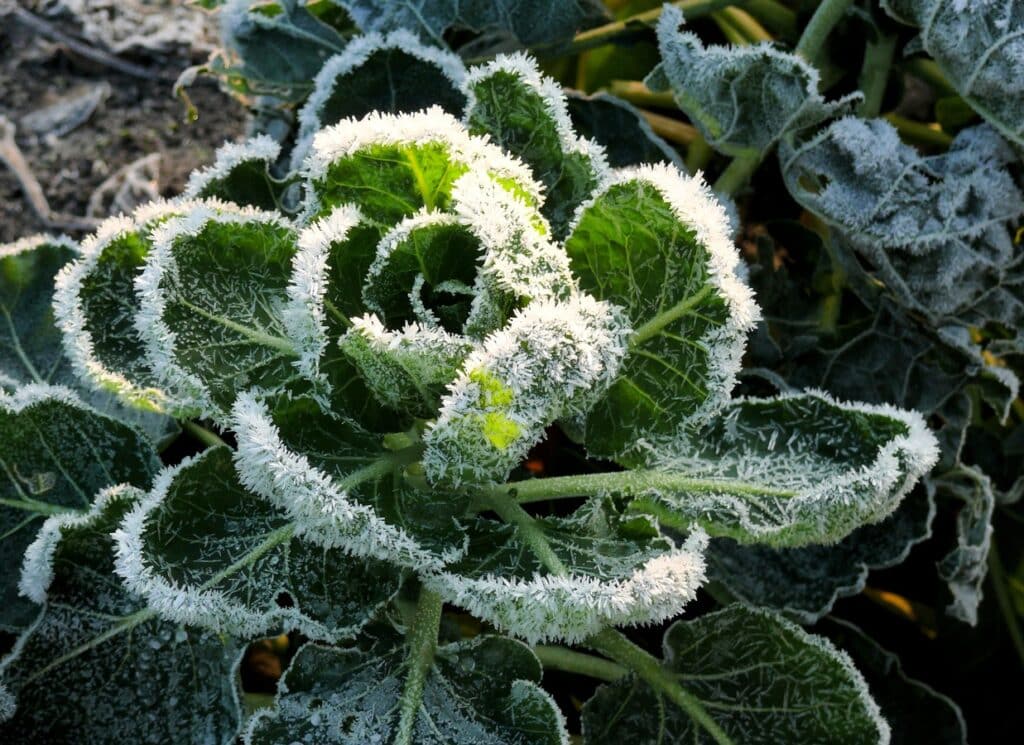
Most gardeners pack up when temperatures drop, but some vegetables actually improve after they’ve been kissed by frost. Ev sat down with Cris, a local gardener who’s been growing food through winter for years, to talk about which crops laugh in the face of freezing temperatures.
What Makes a Vegetable Cold Hardy?
It’s not just about survival; it’s about thriving when the thermometer plummets.
“These vegetables can adjust the sugar and starch content in their tissues. It acts like natural antifreeze. That’s why winter crops actually taste sweeter after frost; those sugars aren’t just for protection, they enhance flavor too.”
There are two categories to know: frost-tolerant vegetables handle temperatures around 28-32°F. Freeze-tolerant champions keep going even when it drops into the teens or lower.
Best Cold Hardy Leafy Greens for Winter
Kale
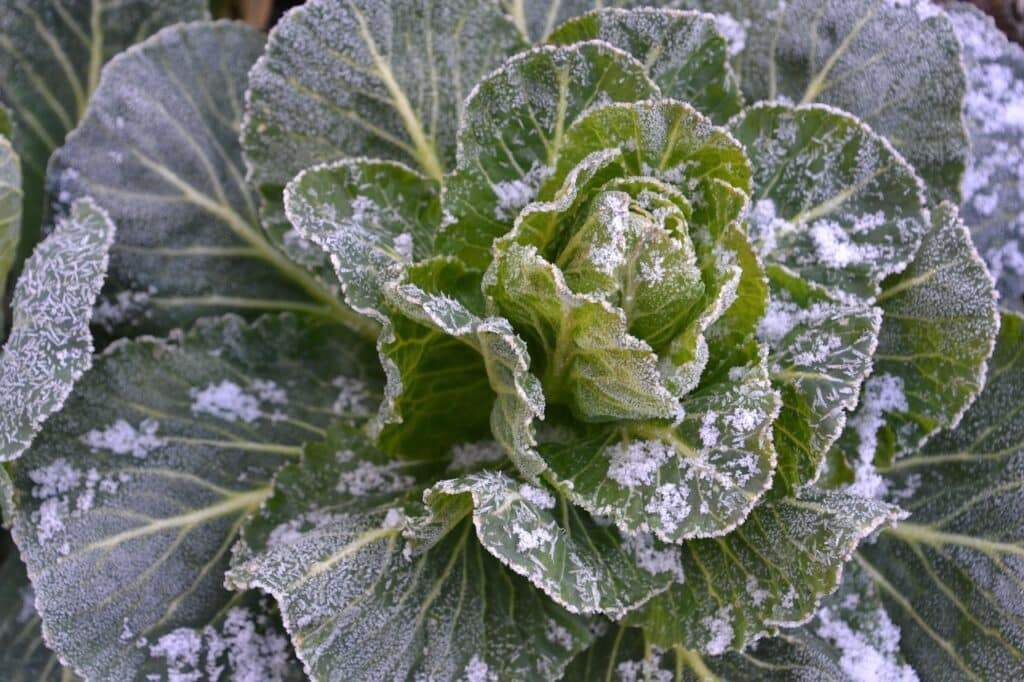
The undisputed champion of winter greens.
“Cold actually improves kale’s flavor by reducing bitterness. You can harvest leaves throughout winter as long as the ground doesn’t freeze solid.”
Kale survives down to 10°F without protection.
Spinach
Plant it in fall for super early spring harvests.
“Spinach gets sweeter with frost exposure. Some varieties can handle temps down to 15°F with minimal protection.”
It’ll overwinter in most climates and be ready when nothing else is growing.
Collard Greens
A Southern staple for good reason.
“Collards prefer cool weather. They’re so reliable, they’ve been a winter staple in the South forever. They can handle down to 10°F.”
The greens actually get sweeter after frost hits them.
Swiss Chard
Colorful and productive through winter.
“Swiss chard adds color to your winter garden with those bright stems. Plus you can harvest outer leaves and let the plant keep producing.”
Not quite as cold hardy as kale, but with row covers it’ll produce through most winters.
Arugula
Fast-growing even in cool weather.
“That peppery flavor mellows slightly in cold weather, which makes it perfect for winter salads. Plant it in succession every few weeks for continuous harvest.”
Root Vegetables That Love Cold Weather
Carrots
They get sweeter as temperatures drop because they convert starches to sugars.
“Carrots can stay in the ground all winter in many climates—just mulch them heavily. Think of your garden as a root cellar.”
Some varieties tolerate temps down to 15°F in the soil.
Parsnips
Here’s the secret most people don’t know.
“Parsnips actually require frost to develop their characteristic sweet, nutty flavor. Plant them in spring but don’t harvest until after several hard frosts in fall.”
They’re incredibly cold hardy and can overwinter in the ground in zones 5-9.
Turnips
Two crops in one package.
“Turnips give you two crops in one—the roots and the greens are both cold hardy and delicious. The greens can actually handle harder frosts than the roots.”
Both tolerate temperatures in the low 20s. Quick-maturing varieties are perfect for fall planting.
Radishes
Winter varieties are larger and milder than spring types.
“They tolerate frost well, and some Asian varieties like daikon are especially cold tolerant. We used to use a lot of daikon in the restaurants I worked in.”
Alliums That Survive Freezing Temperatures
Garlic
Plant it specifically for the cold exposure it needs.
“Garlic is planted in fall so it can go through winter’s cold period. It needs that cold exposure to form proper bulbs. Hardneck varieties are especially cold tolerant, as they survive temps well below zero when mulched.”
Get your garlic in the ground 4-6 weeks before the ground freezes solid.
Onions
Overwintering varieties are planted in fall for early summer harvest.
“They establish roots in fall, go dormant in winter, then spring back to life for early harvest.”
Short-day varieties work best for winter growing in mild climates.
Leeks
Incredibly frost tolerant and they just keep getting better.
“Leeks are incredibly frost tolerant and actually get sweeter with cold exposure. They can withstand temperatures down to 10°F and in mild climates can be harvested all winter long. They’re one of the most reliable winter crops you can grow.”
When to Plant Cold Hardy Vegetables
Timing is everything. You need crops established before winter’s worst weather hits.
“For most cold hardy crops, this means planting in late summer or early fall. Leafy greens and quick-maturing roots can go in as late as 8-10 weeks before your first frost.”
Brassicas like Brussels sprouts need more time—10-14 weeks before frost. Count backwards from your first frost date using each vegetable’s days to maturity, then add two weeks since growth slows in fall.
Protection: When to Worry and When to Chill
Even tough vegetables need help during extreme cold.
“Don’t overprotect. These vegetables are bred for cold weather. Too much coddling can make them leggy and weak. Save the heavy protection for truly extreme cold snaps.”
Row covers add 4-8 degrees of frost protection. Cold frames can extend your season by weeks or months. For root vegetables, thick mulch keeps the soil from freezing solid so you can harvest all winter.
Harvesting Without Killing Your Crops
Timing matters when harvesting frozen vegetables.
“Harvest in the afternoon when possible. That’s when plants have had time to warm up and release any ice in their tissues. Harvesting frozen vegetables can damage cell walls and turn them to mush.”
Many greens can be harvested using the cut-and-come-again method—take outer leaves and let the center keep growing. Root vegetables can stay in the ground and be harvested as needed, just make sure you can access them through the mulch.
The Mistakes That’ll Tank Your Winter Garden
The number one mistake? Planting too late.
“These crops need time to establish before winter hits hard. A small plant going into winter is vulnerable; a well-established one is a survivor.”
Other common mistakes include choosing the wrong varieties (look for ones labeled “cold hardy” or “overwintering”) and overwatering. Plants still need moisture, but waterlogged soil in freezing temps is deadly.
“Water early in the day so plants can dry before nightfall, and reduce frequency as growth slows.”
Final Thoughts
Cold hardy vegetables prove your garden doesn’t have to sleep through winter. These 9 crops offer fresh produce when grocery store options are limited and expensive. From sweet frost-kissed carrots to crispy kale that shrugs off snow, winter gardening opens up possibilities most people never consider.
Start with a few easy crops like spinach and kale. Pay attention to varieties and planting dates for your zone. And remember—these vegetables are tougher than you think.
Many of these cold hardy vegetables grow exceptionally well in containers. Check out our winter container gardening tips for strategies on growing these crops in pots through the cold months.
What cold hardy vegetables have you tried growing? Drop a comment below and share your winter gardening experiences!
*featured Photo by form PxHere